 sales@customrigidboxes.com
 (631) 250-5009


How to Measure the Size of a Box?
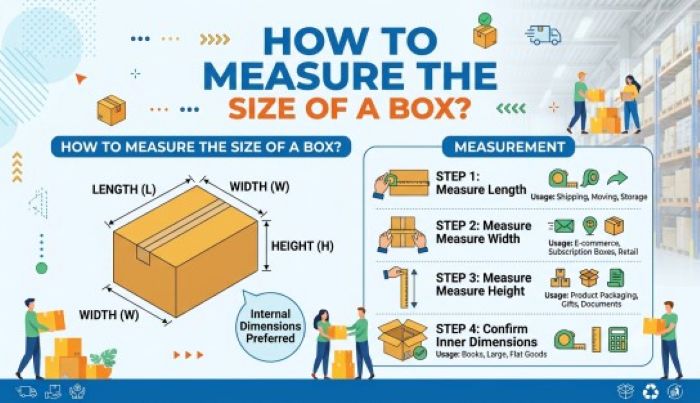
When ordering custom rigid boxes, one of the most important things to know is the exact size of your packaging. Even the most beautifully designed box won’t perform well if the dimensions are incorrect. A box that’s too small can damage your product, while one that’s too large may increase shipping costs, reduce product protection, and create a poor customer experience.
Whether you’re launching a new product, shipping orders, or designing premium retail packaging, understanding how to measure a box correctly ensures your packaging fits perfectly and performs as intended.
In this comprehensive guide, you’ll learn the correct way to measure box dimensions, understand industry measurement standards, avoid common mistakes, and determine the ideal size for your packaging.
Why Accurate Box Measurements Matter
Before measuring any box, it’s important to understand why dimensions play such a critical role in packaging.
Correct box dimensions help:
- Protect products during transportation
- Reduce unnecessary shipping costs
- Improve warehouse storage efficiency
- Create a premium unboxing experience
- Minimize product movement inside the package
- Ensure compatibility with shipping carriers
- Reduce material waste
- Improve customer satisfaction
For businesses investing in custom rigid boxes, accurate measurements also help manufacturers produce packaging that perfectly matches your products while maintaining a luxurious appearance.
Understanding Box Dimensions
Every packaging manufacturer follows the same standard when measuring a box.
The dimensions are always written in this order:
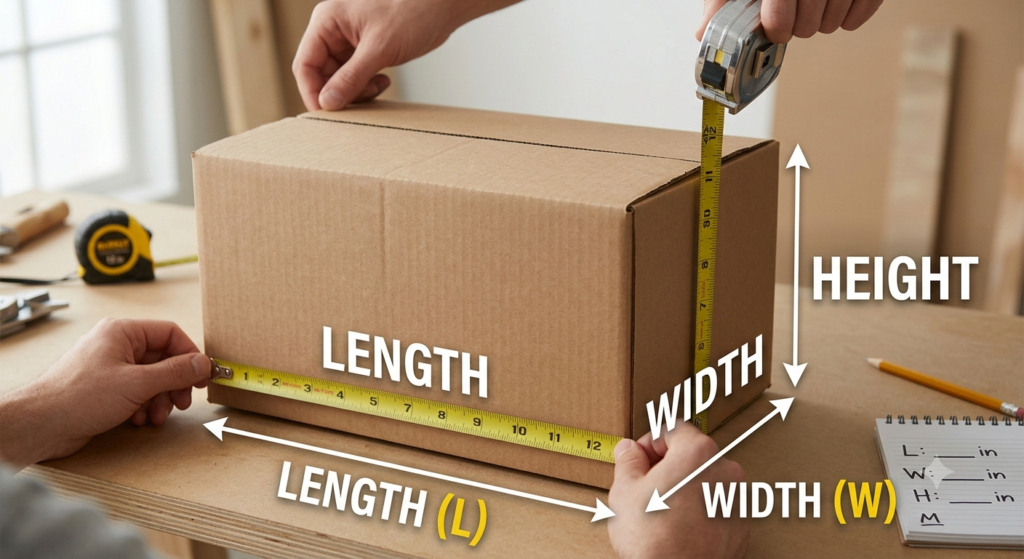
Length × Width × Height (L × W × H)
Let’s understand what each measurement means.
Length
The length is the longest side of the box opening.
Width
The width is the shorter side of the opening.
Height (or Depth)
The height is the distance from the top opening to the bottom of the box.
Remember this simple rule:
Length is always the longest side. Width is the shorter side. Height is the vertical measurement.
Using the wrong order can lead to manufacturing errors, especially when ordering custom packaging boxes.
Tools You’ll Need
Fortunately, measuring a box doesn’t require specialized equipment.
You’ll need:
- Measuring tape
- Metal ruler
- Straight edge
- Digital caliper (for small luxury packaging)
- Notebook or phone to record measurements
A rigid ruler works best for smaller rigid packaging boxes because it provides more accurate readings than a flexible tape.
How to Measure the Size of a Box Step by Step
Step 1: Place the Box on a Flat Surface
Position the box on a stable table or floor.
Ensure the box is fully assembled if you’re measuring an existing package.
Step 2: Measure the Length
Locate the longest side of the box opening.
Measure from one inside edge to the opposite inside edge.
Record the measurement.
Example:
Length = 12 inches
Step 3: Measure the Width
Next, measure the shorter side of the opening.
Again, measure from inside edge to inside edge.
Example:
Width = 8 inches
Step 4: Measure the Height
Measure from the inside bottom of the box to the inside top edge.
Example:
Height = 4 inches
Step 5: Write Dimensions Correctly
Always record the measurements as:
Length × Width × Height
Example:
12 × 8 × 4 inches
Never write:
8 × 12 × 4
Changing the order may result in receiving the wrong packaging.
Should You Measure Inside or Outside Dimensions?
This is one of the most common questions in packaging.
Professional packaging manufacturers use inside dimensions because they determine how well the product fits.
Inside Dimensions
Measure the usable space available for the product.
Best for:
- Product packaging
- Custom rigid boxes
- Gift boxes
- Luxury packaging
Outside Dimensions
Measure the complete external size of the box.
Useful for:
- Shipping calculations
- Storage
- Warehouse planning
- Freight pricing
When ordering custom printed boxes, manufacturers almost always ask for inside dimensions.
Visual Guide to Box Measurements
Measuring Different Types of Boxes
Different packaging styles require slightly different measurement methods.
Rigid Boxes
Rigid boxes are made from thick paperboard and are commonly used for luxury products such as electronics, cosmetics, jewelry, and gift packaging. Because of their sturdy construction, accuracy is especially important.
When measuring a rigid box:
- Measure the inside dimensions of the base, not the outer walls.
- Record the measurements as Length × Width × Height (L × W × H).
- Do not include the lid unless your packaging manufacturer specifically requests lid dimensions.
- If the box includes foam inserts or dividers, account for the space they occupy.
Best Practice: Always provide internal dimensions when ordering custom rigid boxes to ensure your product fits securely without excess movement.
Mailer Boxes
Mailer boxes are widely used for e-commerce, subscription boxes, and shipping products directly to customers. These boxes feature interlocking flaps and should always be measured after assembly.
Follow these steps:
- Assemble the box completely before taking measurements.
- Measure the interior length, width, and height.
- Do not measure the flat die-cut sheet before folding.
- Consider additional space if protective inserts, tissue paper, or cushioning materials will be placed inside.
Tip: Measuring an unfolded mailer box can lead to inaccurate dimensions and manufacturing issues.
Folding Cartons
Folding cartons are lightweight packaging boxes commonly used for food, pharmaceuticals, cosmetics, and retail products. Since they ship flat, measurements should only be taken once the carton is fully assembled.
When measuring a folding carton:
- Assemble the carton into its final shape.
- Measure the inside dimensions.
- Record the size as Length × Width × Depth (or Height).
- Ensure all flaps are properly folded before measuring.
Common Uses: Soap boxes, cereal boxes, medicine cartons, cosmetic packaging, and retail boxes.
Two-Piece Boxes
Two-piece boxes consist of a separate base and lid, making it a popular choice for luxury packaging, gift boxes, and premium retail products.
To measure a two-piece box:
- Measure only the inside dimensions of the base unless the manufacturer asks for both pieces.
- Record the dimensions as Length × Width × Height.
- Measure the lid separately if you need a replacement or a custom-fitting cover.
- Ensure the lid overlaps the base correctly without affecting the internal measurements.
Tip: The base dimensions determine how well your product fits, while the lid dimensions are typically adjusted by the manufacturer for a proper fit.
Sliding Boxes
Also known as slide boxes or matchbox-style packaging, sliding boxes consist of an inner tray that slides in and out of an outer sleeve. Both components should be measured individually.
Measure the following:
- Inner tray: Measure the usable internal space where the product sits.
- Outer sleeve: Measure separately if requested by the manufacturer.
- Record all measurements using the standard Length × Width × Height format.
- If foam inserts or ribbons are included, account for their thickness when determining tray dimensions.
Best Practice: Always provide the dimensions of the inner tray first, as these determine the available space for the product, while the outer sleeve is designed to fit around it.
Common Box Measurement Units
Packaging companies typically work in:
- Inches
- Millimeters (mm)
- Centimeters (cm)
United States manufacturers usually use inches.
International suppliers often prefer millimeters.
Always specify the unit when submitting measurements.
Example:
12 × 8 × 3 inches
or
305 × 203 × 76 mm
Common Mistakes When Measuring a Box
Many businesses accidentally submit incorrect measurements.
Avoid these mistakes:
Measuring Outside Instead of Inside
This creates boxes that don’t fit the product.
Recording Dimensions in the Wrong Order
Always use:
Length × Width × Height
Forgetting Product Clearance
Leave enough room for:
- Foam inserts
- Tissue paper
- Magnetic closures
- Product manuals
- Protective padding
Measuring a Collapsed Box
Always assemble the box first.
Ignoring Material Thickness
Rigid packaging has thicker walls than folding cartons, slightly reducing internal space.
How Much Extra Space Should a Box Have?
A good packaging design balances protection with presentation.
General recommendations:
| Product Type | Extra Space |
| Electronics | 10–20 mm |
| Cosmetics | 5–10 mm |
| Jewelry | 3–5 mm |
| Gift Boxes | 10–15 mm |
| Apparel | 15–25 mm |
| Luxury Products | Depends on the insert design |
If you’re using foam inserts, EVA inserts, or cardboard dividers, include them in your calculations.
How Box Dimensions Affect Shipping Costs
Shipping companies calculate charges using:
- Actual weight
- Dimensional weight
An unnecessarily large box increases shipping expenses even if the product is lightweight.
Choosing the correct custom box dimensions helps businesses:
- Reduce courier charges
- Improve pallet efficiency
- Lower packaging material costs
- Increase warehouse storage capacity
Accurate sizing also contributes to more sustainable packaging by reducing excess materials and transportation inefficiencies.
Choosing the Right Box Size for Your Product
Before ordering custom packaging boxes, consider:
- Product dimensions
- Product weight
- Fragility
- Protective inserts
- Branding requirements
- Shipping method
- Retail display needs
Luxury products often require additional space for premium inserts and presentation elements, while e-commerce packaging should prioritize secure fit and shipping efficiency.
Box Size Tips for Different Industries
Cosmetics
Allow space for protective inserts while keeping the product snug.
Electronics
Include foam cushioning and cable compartments.
Apparel
Measure folded garments accurately and avoid unnecessary empty space.
Food & Bakery
Account for liners, trays, or food-safe inserts when determining internal dimensions.
Luxury Gifts
Leave room for tissue paper, ribbons, magnetic closures, and premium presentation accessories.
Best Practices When Ordering Custom Boxes
To ensure your packaging is manufactured correctly:
- Double-check all measurements before placing an order.
- Specify whether the dimensions are inside or outside measurements.
- Use the standard Length × Width × Height format.
- Mention the measurement unit (inches or millimeters).
- Inform your packaging supplier if inserts, dividers, or special closures will be included.
- Request a prototype or sample for high-value packaging projects before full production.
Final Thoughts
Learning how to measure the size of a box is a simple yet essential step in creating effective, attractive, and functional packaging. Accurate box dimensions help protect products, reduce shipping costs, and ensure a polished customer experience. By following the standard Length × Width × Height method and measuring the inside of the box whenever possible, you can avoid costly sizing errors and streamline the packaging process.
If you’re looking for premium custom rigid boxes manufactured to your exact specifications, Custom Rigid Boxes provides tailored packaging solutions for businesses across industries. From luxury retail packaging and gift boxes to subscription and e-commerce packaging, our team can help you choose the ideal dimensions, materials, and finishes to create packaging that protects your products while elevating your brand.
FAQs
The standard order is Length × Width × Height (L × W × H). Length is the longest side of the opening, width is the shorter side, and height is the distance from the base to the top.
For custom packaging and product fit, measure the inside dimensions. Outside dimensions are mainly used for shipping and storage calculations.
Correct measurements help ensure a proper product fit, reduce shipping costs, improve protection during transit, and minimize packaging waste.
A measuring tape or metal ruler is sufficient for most boxes. For smaller rigid boxes or luxury packaging, a digital caliper can provide greater precision.
The amount depends on your product and any protective materials. Generally, leave enough room for inserts, cushioning, or presentation elements without allowing excessive movement inside the box.
