 sales@customrigidboxes.com
 (631) 250-5009


Eco-Friendly Rigid Box Packaging: Sustainable Solutions Explained
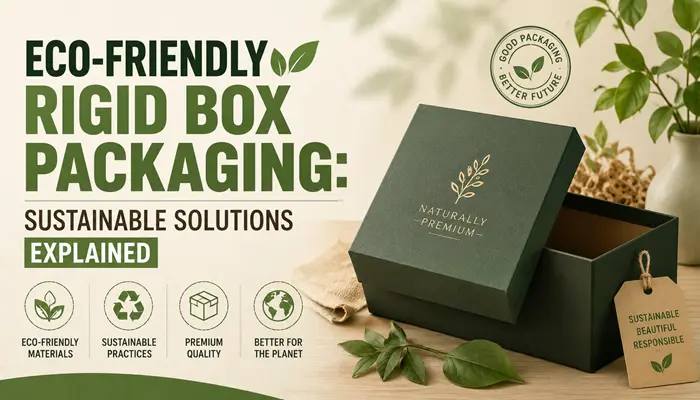
When you step inside any modern store or browse on any eCommerce website and there’s one thing that becomes apparent – packaging is no longer a question of safeguarding your product. But nowadays, you should focus on doing your bit in minimizing your environmental impact.
Consumers today weigh the value of their purchases not only by assessing what comes within the package but also by judging what the packaging material is and whether it conforms with their values. Green rigid boxes have emerged due to this trend. Rigid and luxurious boxes have traditionally gone hand-in-hand. However, things have been changing since the world moves into the year 2026 and sustainable practices call for luxury products made through sustainable packaging.
It hardly happens that one particular product decides to switch over to sustainable packaging at a certain point in time. On the contrary, changes like replacing one element with another, eliminating an extra layer of packaging or using a certain type of rigid box can lead to making your approach sustainable. Interestingly enough, sustainability opens up many opportunities for innovations for companies.
This guide will cover all aspects of sustainability associated with rigid boxes.
What Is Eco-Friendly Rigid Box Packaging?
Eco-box rigid packaging essentially revolves around the production of premium boxes through the use of eco-friendly materials.
Whereas traditional rigid boxes contain lamination layers and plastic coatings, eco-rigid boxes focus on:
- Reusability of rigid packaging material
- Degradation of packaging material
- Reduced waste creation during the manufacturing process
- Reduction of environmental impact
These boxes retain their quality and superior finish while meeting modern environmental requirements.
Why Rigid Boxes Still Dominate Premium Packaging
Despite the efforts to ensure sustainability, the insistence on rigid boxes remains strong because there is justification for such preference.
1. Durability
This type of box is recognized for its durability and ability to offer protection.
2. Quality Packaging
The rigid box packaging gives an impression of high-quality packaging.
3. Reusability
Unlike the disposable boxes, the rigid boxes are kept for reuse in the future.
4. Versatility
Custom rigid box packaging can be utilized in different sectors such as cosmetics and electronics.
How Do Rigid Boxes Ensure Sustainability?
Not all rigid packaging containers are sustainable. What makes a rigid box sustainable includes the following factors:
1. Material Composition
One of the key factors that make rigid packaging containers eco-friendly is the material used in the production of the containers.
Some of the sustainable materials include:
- Recycled paperboard
- FSC certified papers
- Kraft paper wraps
2. Plastic-Free Finishes
The typical rigid boxes use plastic lamination for their glossy effect and durability. Green alternatives are:
- Water-based coating
- Matte aqueous coating
- Soft touch biodegradable coating
They retain their beauty without compromising recyclability.
3. Minimalist Structural Design
Sustainability isn’t only about choosing materials but also using fewer resources.
Rigid box design should concentrate on:
- Removing any excess layers
- Making the box thinner where feasible
- Effective packing and shipping
4. Recyclable and Biodegradable
This packaging consists of:
- Use of a single material
- Limited use of adhesive
- Recyclable finishes for surfaces
Types of Eco-Friendly Rigid Boxes
Even different box styles may be made sustainable with proper design.
1. Magnetic Closure Rigid Boxes
These boxes may be made sustainable through the use of more sustainable magnet closures and material layer reduction.
2. Two-Piece Rigid Boxes
Two-piece rigid boxes consist of two components – lid and base, easy to recycle and reuse.
3. Drawer (Slide-Out) Rigid Boxes
Slide-out boxes are popular for luxury packaging. Sustainability depends on using recyclable inner trays and minimal coatings.
4. Foldable Rigid Boxes
Collapsible rigid boxes have trending sustainable designs that decreases space for storage and shipment.
Benefits of Eco-Friendly Rigid Box Packaging
It has been observed that not all advantages of sustainable packaging come right away. There are cases where brands have seen an alteration in perception, but there are also instances where the improvements have been in logistics and materials used. It all just depends on the role packaging plays in the business. It’s important to remember, though, that after this shift occurs, everything else follows suit.
1. Enhanced Brand Perception
Today’s customers look up to brands who put effort into environmentally friendly packaging. This creates a lasting impression.
2. Lower Negative Impact on Nature
Recyclable packaging lowers the impact on the environment and carbon footprint.
3. Cost Efficiency
Although there might be additional costs involved, it can ultimately lead to savings through material optimization and logistics efficiency.
4. Compliance with Regulations
The packaging industry is increasingly tightening its regulatory measures. By using sustainable packaging, you ensure compliance.
5. Improved Unboxing Experience
Eco-friendly packaging also improves product’s unboxing experience.
How to Design Eco-Friendly Rigid Boxes
Following measures can be taken to design sustainable rigid boxes:
Step 1: Select the Right Type of Material to Use
This could either be recycled or FSC paperboard but just one should be selected.
Step 2: Make Sure You Size the Boxes Correctly
Box-sizing will save you from wastage and reduce shipping expenses.
Step 3: Employ Efficient Printing Methods
Change to:
- Soy-based ink
- Water-based coating
- Limited color use where necessary
Step 4: Design the Package for Many Purposes
Design packages that people would like to keep.
Example:
- Storage boxes
- Gift packages
- Reusable packages
Step 5: Test Your Package Before Using It
Always create samples first to test your product.
Common Mistakes to Avoid
Even well-intentioned brands make these mistakes:
1. Over-Packaging
This renders the whole concept of sustainability meaningless.
2. Adopting “Green” Labels without Evidence
Not all “environmentally friendly” statements are backed up by facts, and customers can tell that.
3. Neglecting the Supply Chain Effect
Sustainability should also be a part of the manufacturing process and logistics.
4. Endangering Product Safety
Product safety should not be compromised for eco-friendly packaging.
Trends in Sustainable Rigid Box Packaging in 2026
The industry is developing rapidly. And here is what will define its future:
1. Waste-free packaging systems
Boxes come with absolutely no extra material or filler in them.
2. Modular Packaging
One-size boxes with various insert configurations are needed.
3. Carbon-Neutral Production
Sustainable strategies are used to offset emissions by brands.
4. Smart Packaging Integration
QR codes are being used instead of printed inserts.
5. Consumer Transparency
Brands are revealing information on the origins of materials.
Real Talk: Is Eco-Friendly Packaging Worth It?
Yes, but that is only a partial truth.
The full truth is this:
Sustainable packaging is not about substituting one material for another. The whole approach to packaging must be transformed completely. If done correctly, sustainable packaging will serve your company, your clients, and your brand.
As far as practicality goes, sustainable packaging is a combination of looking great, being functional, and having environmental responsibility in mind. While there is no one-size-fits-all recipe to follow when it comes to packaging, certain products are better suited to reusable packaging while other products benefit from packaging that uses less material or is even completely recyclable.
Conclusion: Where Sustainability Meets Premium Packaging
Sustainable packaging is no longer a trend, but it is a way forward for the whole packaging industry.
From the case of sustainable rigid box packaging, it is evident that sustainability does not come at the cost of good quality and design aesthetics.
This is exactly what Custom Rigid Boxes strives for, as we understand that quality and sustainability go together. This is the reason we pride ourselves in manufacturing environmentally friendly rigid boxes which will not just be helpful in marketing your products but also sustain the standards of sustainability in today’s world.
Through the use of sustainable raw materials, an effective packing structure, and appropriate aesthetics, we ensure that your packaging conveys the right message about your brand’s dedication towards sustainable efforts. In the modern world, quality packaging means a lot more than just protection of your product.
FAQs
These boxes can be made from recycled paperboard, kraft paper, and FSC-approved materials, as well as eco-friendly ink and coating.
Absolutely, so long as the rigid boxes do not include any form of plastic lamination or other kinds of materials.
Indeed, the increased expense is offset by reduced costs in the long term due to good design and improved brand image.
Yes. With modern design trends, it is easy to blend luxury with sustainability.
