 sales@customrigidboxes.com
 (631) 250-5009


Types of Packaging: Primary, Secondary & Tertiary
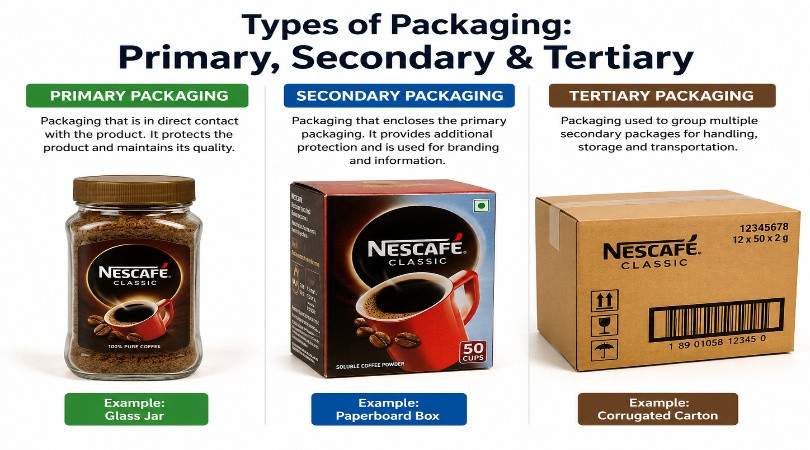
Today, packaging plays a vital role in ensuring safety, branding, distribution, and perception. Whether you are a local businessman or a corporate manager heading a multinational company’s logistics, it is important to understand the various types of packaging that will aid you throughout the process of manufacturing your goods right through to its consumption by your customer.
Here is an extensive guide on the three types of packaging, namely, primary packaging, secondary packaging, and tertiary packaging.
What Are the Main Types of Packaging?
The packaging of products in today’s world is mainly categorized into three types of packaging:
- Primary Packaging
- Secondary Packaging
- Tertiary Packaging
All these types perform different roles, ranging from protecting the goods in question to bulk transport. Collectively, they constitute an effective packaging strategy.
1. Primary Packaging: The First Point of Contact
What Is Primary Packaging?
The primary packaging can be defined as the first level of packaging material that will be used for the protection, preservation, and presentation of the product.
Examples of Primary Packaging
- Plastic bottles used for drinks
- Blister packages used for medications
- Glass jars used for cosmetics
- Food wrappings used for food products
- Tubes used for creams and lotions
Key Functions
- Protection: Protects the product against contamination, water exposure, and damage
- Preservation: Increases the shelf life, especially for food items and medicines
- Ease of Use: Convenient to open, store, and utilize
- Product Information: Provides information about the product, its contents, and the brand
The effectiveness of primary packaging can be said to have a very great impact on the purchasing decision of customers.
Types of Primary Packaging Materials
Speaking about different materials used in packaging, primary packages are made from:
- Plastic (PET, HDPE)
- Glass
- Aluminum
- Paperboard
- Films
2. Secondary Packaging: Branding Meets Protection
What Is Secondary Packaging?
The secondary packaging is described as the outer packaging that contains a number of units of the primary packaging. It is noteworthy that while the primary packaging interacts with the product directly, the secondary packaging does not interact with the product at all.
Examples of Secondary Packaging
- Cardboard boxes holding several units of products
- Packaging boxes for cosmetics
- Shrink-wrapped packs
- Retail display boxes
Key Functions
- Combining products: Helps in forming small groups of products
- Extra protection: Helps in adding an extra level of protection
- Marketing potential: Allows room for logos, colors, and messaging
- Retail display: Improves the display effect on shelves
This layer of packaging plays a big role when it comes to branding. That’s why a lot of money is spent on designing secondary packages.
As an example, more and more companies are resorting to collapsible packaging boxes for their secondary packaging needs due to several advantages, such as efficient storage, affordability, and a high-end unboxing experience.
Types of Packaging in Marketing
- Visual Impact: Appealing design. catches the eye
- Storytelling: Conveys the values and identity of the brand
- Differentiation: Aids in distinguishing from competitors
- Unboxing: Improves customer satisfaction
In the current age of social media. and influencer marketing, secondary packaging is frequently what gets shared on Instagram and other platforms.
3. Tertiary Packaging: The Backbone of Logistics
What Is Tertiary Packaging?
The third type of packaging material that is used in the bulk handling, storing, and transporting of items is tertiary packaging.
Examples of Tertiary Packaging
- Cartons
- Pallets
- Crates
- Stretch wrapping
- Bulk packaging
Key Functions
Protection from Damage: It protects against damage. while shipping.
Facilitating Movement: It facilitates movement using forklifts and machinery.
Optimizing Storage Space: It enables stacking. to optimize storage space.
Effective Logistics Management: It ensures the smooth flow of the logistics process.
Why Understanding Different Types of Packaging Matters
Knowing about the various types of packaging materials has practical applications when it comes to business.
1. Cost-effectiveness
Proper use of packaging materials. helps save on material usage, freight expenses, and possible damage to the goods.
2. Product Protection
The different layers of the packaging help protect the product and deliver it in good condition.
3. Branding and Customer Impressions
Packaging impacts customer perceptions, particularly in online shopping.
4. Sustainability Objectives
Businesses have the opportunity to select sustainable packaging materials.
Types of Packaging Materials Explained
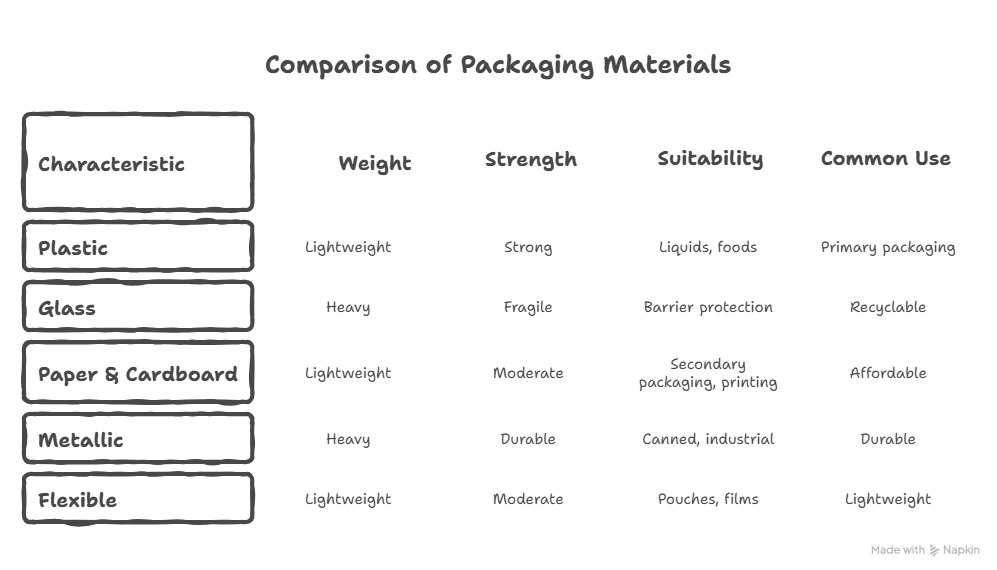
The choice of packaging material is important when assessing the efficiency of the different packaging levels.
Plastic Packaging
- Lightweight and strong
- Suitable for liquid products and foods
- Used commonly in primary packaging
Glass Packaging
- Beautiful looking
- Provides good barrier protection
- Is recyclable and environmentally friendly
Paper & Cardboard
- Affordable and recyclable
- Commonly used in secondary packaging
- Good for printing purposes
Metallic Packaging
- Durable and strong
- Used for the packaging of canned and industrial products
Flexible Packaging
- Pouches and films
- Lightweight and space-saving
Packaging materials play a crucial role in determining the effectiveness of each packaging level.
How the Three Packaging Levels Work Together
Consider packaging as a system. instead of as individual components.
- Primary packing is for the protection of the actual product.
- Secondary packing makes organization and promotion possible.
- Tertiary packing guarantees safe transport in bulk amounts.
Used properly, all three layers will make for a smooth process from creation to consumer.
For instance:
- The container for the perfume is the primary packing.
- Encased in its branded box is secondary packing,
- Shipped in bulk packaging on a pallet is tertiary packing.
Types of Packaging in Marketing
If we take a look at the types of packaging used in marketing today, one can say that packaging in itself has become much more than just a protective cover for products anymore. Rather, today’s packaging solutions are visual, emotional, and strategically implemented by companies trying to communicate with their customers and influence them. In many ways, packaging is the very first thing a consumer experiences when they engage with the product.
Considering the fact that our reality today is dominated by social networks and e-commerce sites, the importance of the packaging increases significantly. Good packaging solutions not only protect a product, but also make an unforgettable experience that users will be willing to discuss and remember.
Sustainability in Packaging
The modern consumer is environmentally conscious, therefore eco-friendly packaging is essential.
Trends in Eco-Friendly Packaging:
- Recyclable material
- Biodegradable packaging
- Minimal Design
- Reusable packaging
But removing one layer entirely may require another layer, creating inefficiency; this process is known as burden shifting.
This is why companies must consider both sustainability and efficiency.
Common Mistakes Businesses Make
Even for well-known brands, sometimes mistakes occur in the packaging process.
1. Over-Packaging
This leads to high costs and increased pollution.
2. Poor Material Choice
Unfit materials cause product destruction. or reduce their shelf life.
3. Ignoring Branding
A brandless package. does not appeal to consumers.
4. Weak Logistics Planning
Poor tertiary packaging results in goods damage during shipment.
Future Trends in Packaging
Rapid changes are taking. place within the packaging sector.
- Smart packaging using QR codes
- Sustainable and minimalist. packaging concepts
- Tailored packaging solutions
- Increased automation within packaging processes
Companies like Custom Rigid Boxes are responding to the new trend by integrating functionality with creativity. The integration of the right packaging material for each layer allows businesses to create more positive brand recognition and foster customer loyalty.
Final Thoughts
Hence, having information about all three types of packaging is very important to any organization handling tangible products.
The importance of each is explained below:
- Primary packaging preserves. and displays the product
- Secondary packaging highlights the brand name. and organizes products
- Tertiary packaging guarantees the safe transit of products
FAQs
What are the major types of packaging?
The major types of packaging include primary, secondary, and tertiary packaging. They all play different roles ranging from protection to safety during transportation.
What is primary packaging?
Primary packaging is packaging material which comes into direct contact with a product, such as bottles and jars among others. The main roles played by primary packaging include protection and convenience of usage.
What are the roles of secondary packaging?
Secondary packaging helps in branding and grouping the goods together in attractive packs.
Where is tertiary packaging applied?
This type of packaging is mostly applied in bulk handling and transportation of packaged items.
How does packaging material influence the product?
Depending on the chosen packaging material, there can be changes regarding durability, shelf life, price range, and perception of products.
